Industrial applications

A canteen on a shift pattern feeds people at three in the morning, and the workwear still has to be clean by six.

Workforce catering and industrial laundry for manufacturing sites, distribution centres and industrial facilities. Specified for continuous shift operation, heavy soiling and equipment that has to be robust before it is anything else.

Typical siteManufacturing, distribution and industrial
RunsShift patterns, often around the clock
HandlesWorkforce catering and workwear laundry
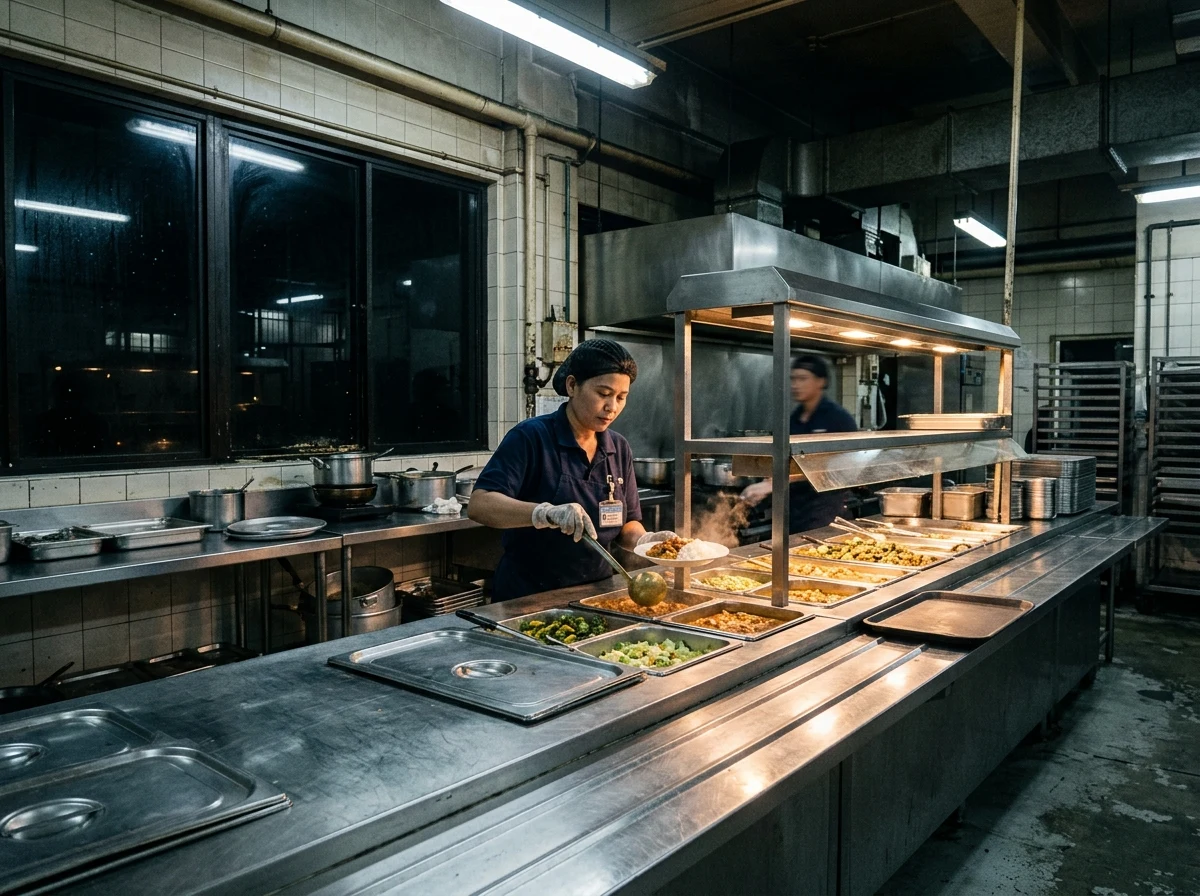
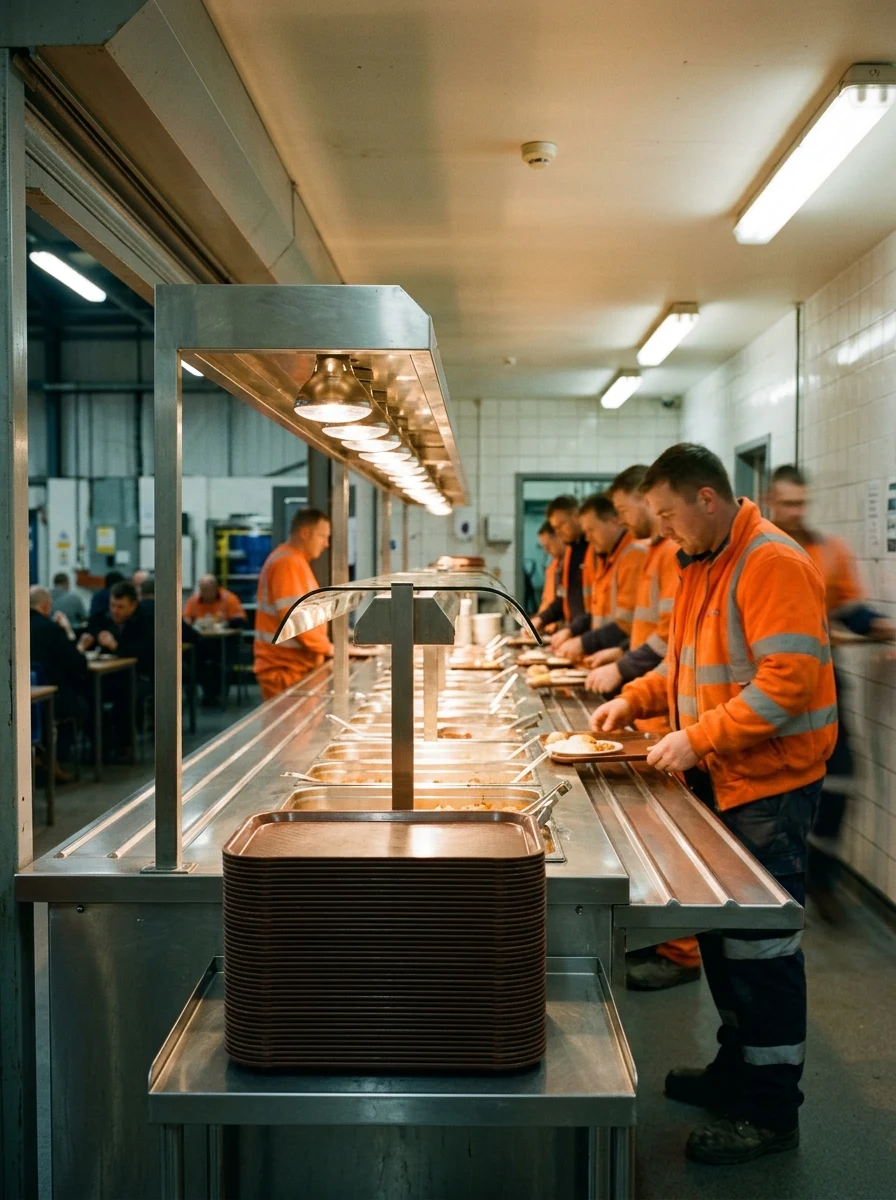
Factory canteen servery with heated wells during a night shift
What we design forThe night shiftEquipment specified for continuous duty, not office hours
What is different here

Nothing stops for the weekend

Industrial sites run when everyone else has gone home, and the equipment is treated accordingly. Six things shape most specifications.

Shift patterns

Two, three or continuous shifts. Catering has to serve at hours a normal kitchen never opens.

Continuous duty

Workwear, not linen

Oil, grease, dust and metal swarf. Industrial laundry chemistry and machines are a different discipline.

Heavy soil rated

PPE and compliance

Where workwear is protective, washing affects performance. Process and records matter.

Documented process

Robust before elegant

Equipment on an industrial site takes knocks. Build quality outranks features.

Heavy duty

Site services

Three-phase, compressed air, process water and industrial drainage. The site usually has more to work with.

Services surveyed

Downtime is measured in output

A canteen or laundry failure disrupts production, so response times are set against that.

Priority response
Reviewing catering or workwear provision?Tell us the headcount, the shift pattern and what you currently outsource. We will specify what is worth bringing in-house.
Scope

Canteen, servery and laundry

Two operations that keep a workforce fed and correctly dressed.

Catering

Feeding a shift

Production and service sized to headcount and break patterns rather than to covers.

  • Bulk cooking for shift meal service
  • Regeneration for meals cooked on an earlier shift
  • Bulk refrigeration and freezer storage
  • Rack and pass-through warewashing
  • Equipment that runs reliably unattended overnight
Servery

Breaks are short

A break is twenty minutes. The servery has to move a queue faster than a restaurant ever does.

  • Hot and cold servery counters
  • Grab-and-go and vending-adjacent chilled provision
  • Beverage and water provision at volume
  • Self-service layouts that move a queue
  • Out-of-hours provision for night shifts
Laundry

Workwear and textiles

Industrial washing specified for oil, grease and heavy soiling.

  • Heavy-duty washer extractors
  • Industrial dryers with proper lint handling
  • Chemistry and dosing for oil and grease
  • Separation where PPE or contamination requires it
  • Capacity sized to the shift changeover
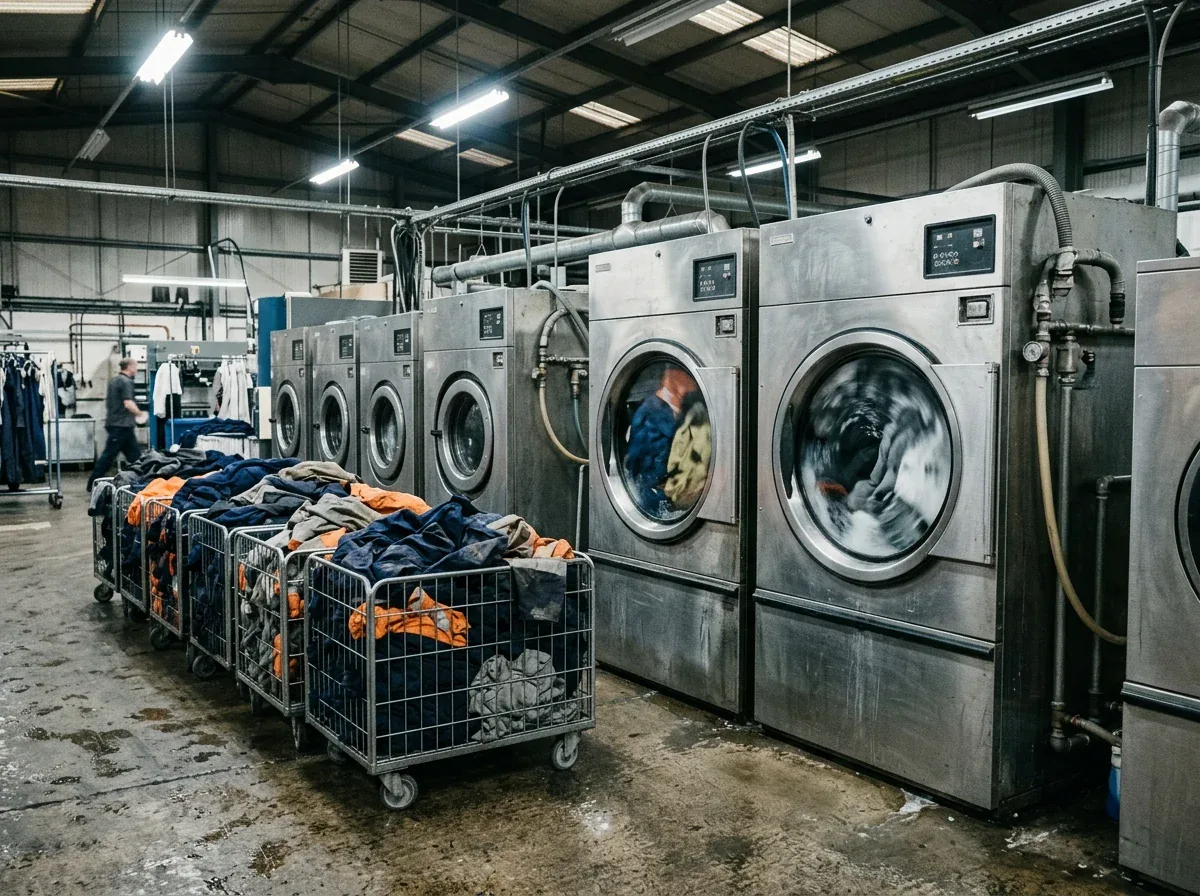
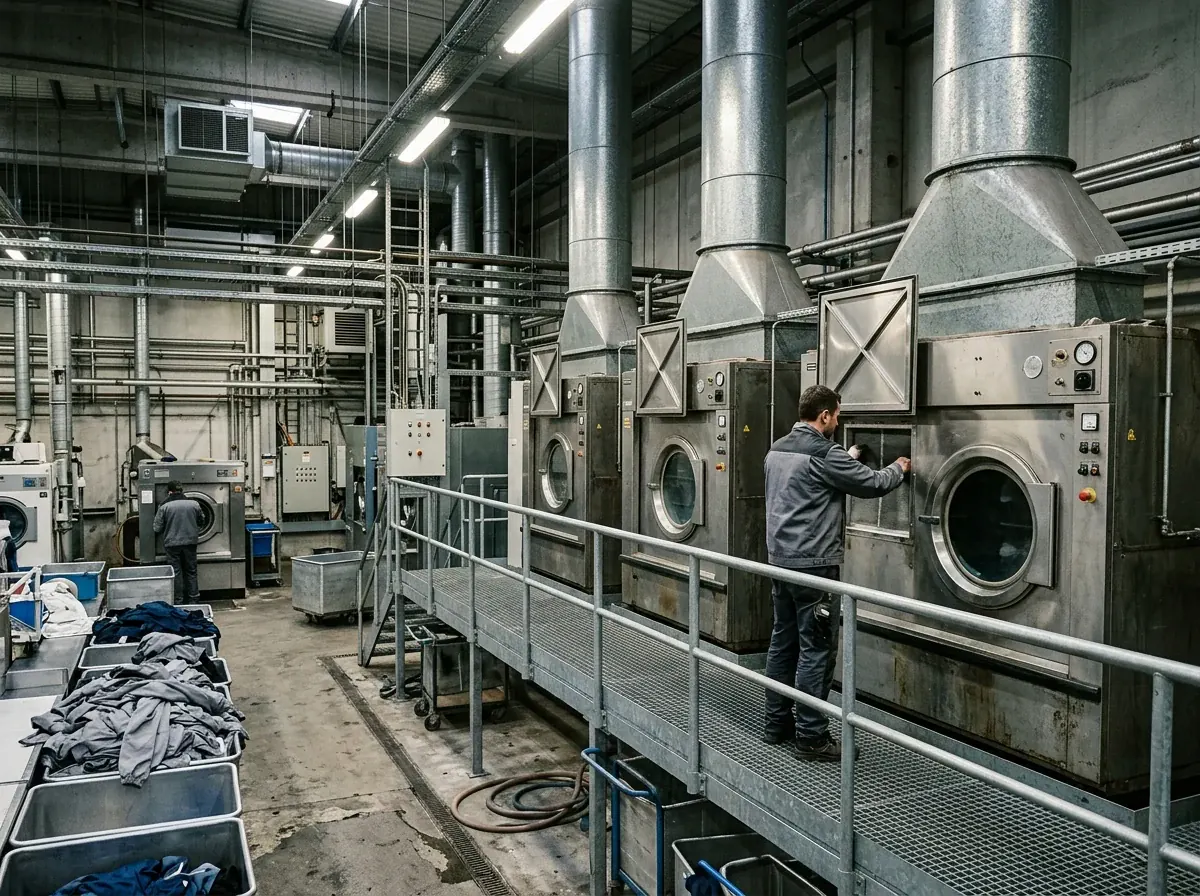
Industrial laundry dryers with galvanised extraction ducting rising to the ceiling
Lint, heat and extractionDucting designed in rather than added afterwards
Industrial laundry

Oil and lint are the two things that end badly

  • Chemistry specified for the soiling, since oil and grease do not come out on a linen programme.
  • Machines rated for heavy soil and continuous duty, not light commercial equipment run hard.
  • Lint handling and duct routes designed in, kept short, accessible and cleared on a schedule.
  • Separation where contamination demands it, including PPE and anything hazardous.
  • Drainage and interceptors appropriate to what comes off the garments.
  • Capacity matched to shift changeover, which is when everything arrives at once.
Continuous operation

Equipment that runs around the clock fails differently

Duty cycle is the number that matters. Equipment specified for a nine-to-five kitchen will not last on a site that never stops.

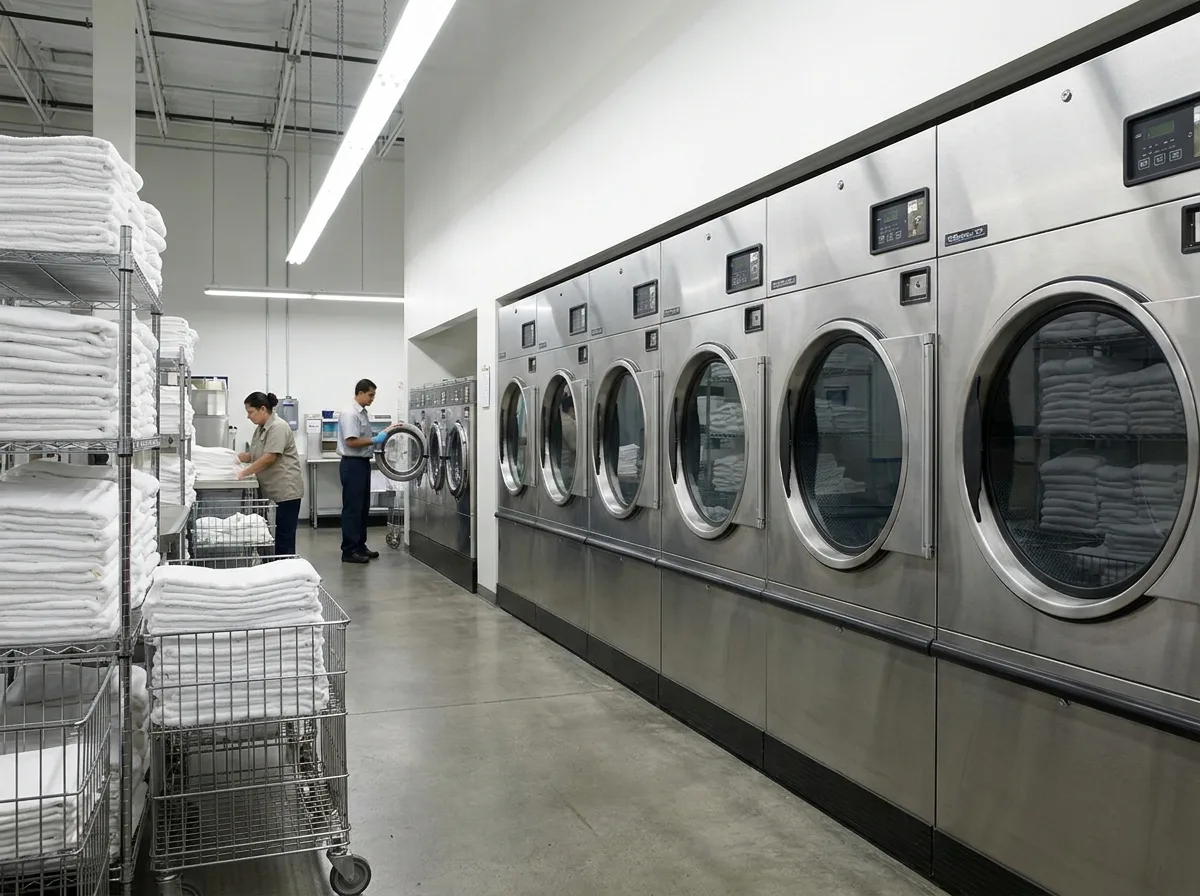
Row of industrial washer extractors running in a workwear laundry
Specified on duty cycleContinuous operation designed for, not hoped for
In-house or outsourced

Bringing it in-house only pays at the right volume

Plenty of sites outsource workwear and canteen provision, and for some that is the right answer. We will model it honestly, including labour, energy and water, rather than assuming the equipment sale.

  • Current contract costs modelled against in-house, including labour.
  • Water, energy and drainage costs included, not just the equipment price.
  • Space and services assessed, since the room often decides the answer.
  • Phased change, taking part of the volume in-house before all of it.
  • Planned replacement forecast from age and duty rather than after a failure.
Talk about the numbers
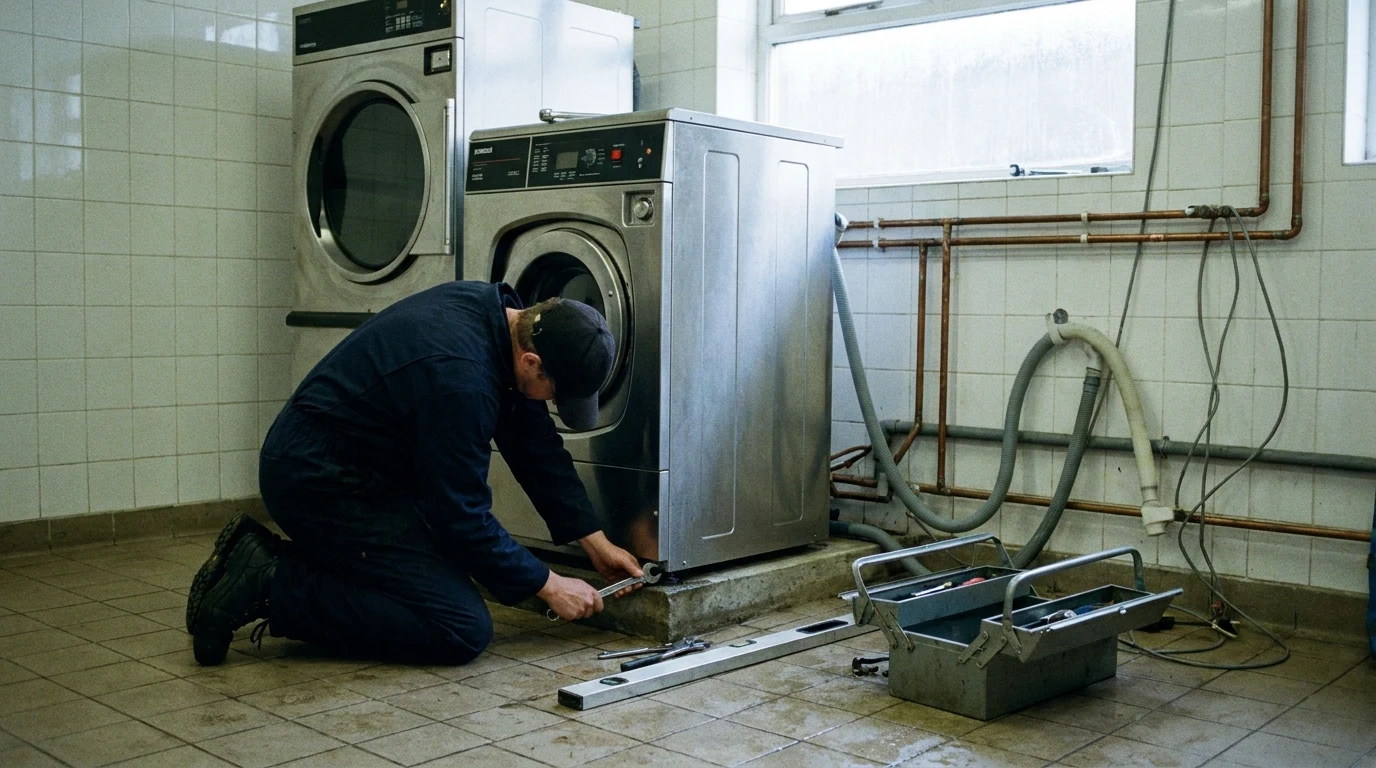
Works canteen hot counter with a heated gantry and workers queuing
How it runs

From headcount to a canteen that runs on nights

1

Survey

Headcount, shift pattern, break times, workwear volumes, services and space.

2

Specification

Catering, servery and laundry specified to duty cycle and shift changeover.

3

Programme

Work planned into shutdowns or quiet shifts, with permits where the site requires them.

4

Install and commission

Installed, commissioned, certificated and demonstrated to catering and facilities teams.

5

Service contract

Planned servicing in shutdowns, priority response when production is running.

24/7 duty
Equipment specified for continuous operation
20 mins
The break a servery has to serve inside
1 contract
Catering, refrigeration and laundry together
UK-wide
Manufacturing, distribution and industrial sites
Questions

What facilities teams ask first

Can equipment be serviced during a shutdown?

Yes, and that is how we prefer to schedule it. Planned visits go into your shutdown calendar, with priority response while production is running.

Is in-house workwear laundry worth it?

It depends on volume, space and labour. We model it against your current contract honestly, including water, energy and drainage, and will tell you if outsourcing wins.

How do you cater for a night shift?

Usually with regeneration of meals cooked on an earlier shift, plus grab-and-go chilled provision. It needs equipment that runs reliably with minimal supervision.

Do you work to site permit systems?

Yes. Permits, isolations, inductions and working hours are agreed with your site team before we start.

Will you maintain equipment you did not supply?

Yes. The asset register is built at the site walk and exclusions are listed then rather than discovered later.

Keep reading

Related services

Talk to us about your site

Tell us the headcount, the shifts and what you outsource.

We will survey the canteen and the laundry, model the options where the answer is not obvious, and quote against your shutdown calendar.

Speak to the team · Mon–Fri 9–501200 411 914

We reply to every enquiry within one working day.