Catering

Equipment that gets loaded into a van on Friday still has to work on Saturday.

Production kitchens, mobile hot holding, transport refrigeration and hire-fleet equipment for contract caterers, event caterers and outside catering operations. Specified for handling, not just for cooking.

Typical operatorContract, event and outside caterers
Sized onThe largest job you take, not the average
Built forBeing moved, cleaned and moved again
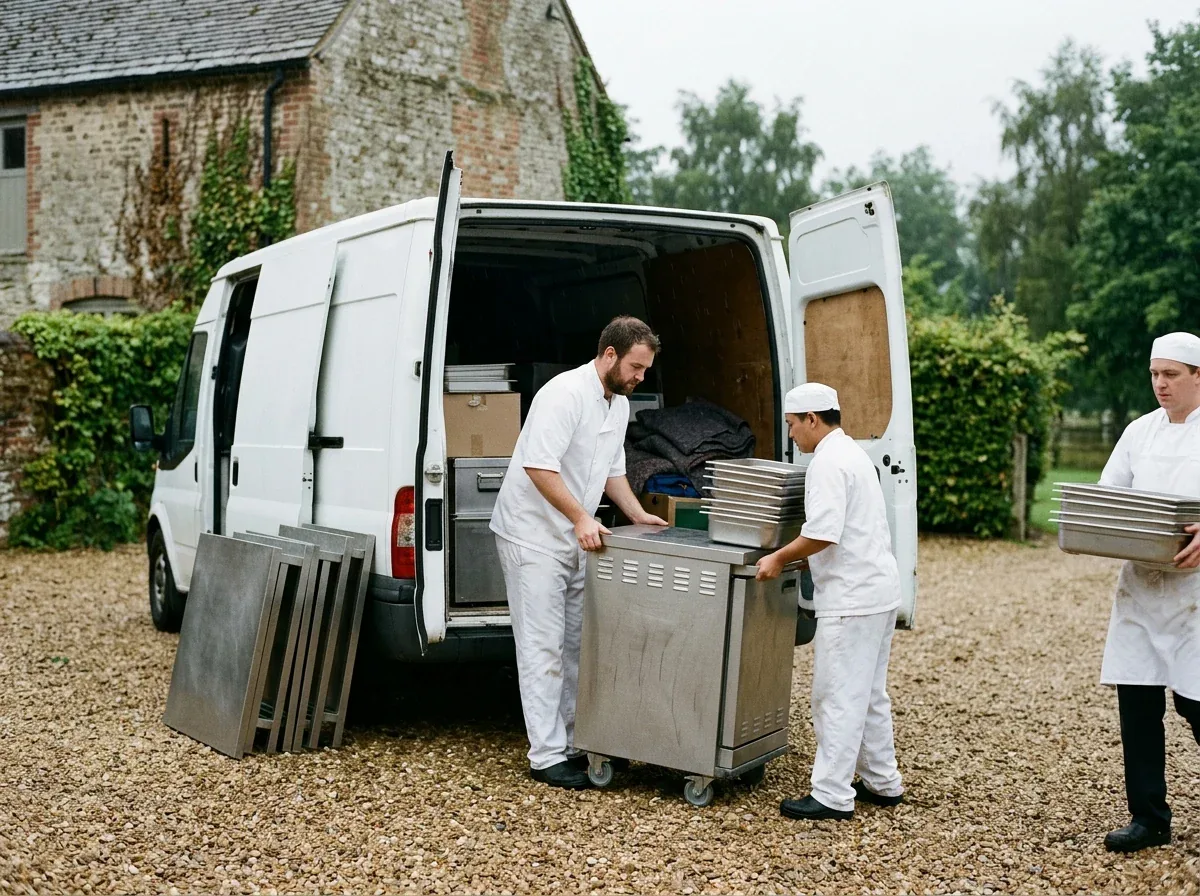
Chefs loading gastronorm containers and a mobile heated cabinet into a catering van
What we design forThe load-outEquipment is specified for handling as much as for cooking
What is different here

The kitchen moves

Caterers punish equipment in ways a fixed kitchen never does. Six things shape most specifications.

It gets moved

Castors, handles, weight and robustness matter as much as output. Equipment that cannot be trolleyed is equipment that gets damaged.

Built to be handled

Power is whatever is on site

Gas, single-phase, three-phase or generator. The specification has to work with what the venue can actually give you.

Flexible power

Cold chain in transit

Refrigerated transport and on-site holding are part of the food safety case, not an afterthought.

Temperature recorded

Production then regeneration

Most volume catering cooks centrally and finishes on site. Both ends have to be specified together.

Cook-chill or cook-serve

Peaks are enormous and rare

A kitchen sized for your biggest job sits idle most weeks. Hire and owned equipment together is usually the answer.

Owned plus hired

Downtime lands on a Saturday

Breakdowns happen at events, out of hours. Spares, redundancy and response tiers matter more than usual.

Redundancy planned
Growing the operation or replacing tired kit?Tell us the biggest job you take and what you currently hire in. We will specify what is worth owning.
Scope

Production, transport and service

Three stages, and the food has to stay safe through all of them.

Production

The base kitchen

Bulk output from a unit sized for your largest regular job.

  • Combi ovens and bratt pans for bulk cooking
  • Blast chillers and freezers for cook-chill
  • Bulk cold and freezer storage
  • Prep benching and heavy-duty food prep
  • Rack and pass-through warewashing
Transport

Cold chain and hot chain

Getting it there at the right temperature and being able to prove it.

  • Refrigerated transport solutions
  • Insulated and heated transport boxes
  • Mobile refrigeration for site use
  • Temperature monitoring and recording
  • Racking and trolleys that load quickly
On site

Service anywhere

Regeneration, holding and service equipment that works in a marquee or a corridor.

  • Mobile hot cupboards and holding cabinets
  • Regeneration ovens and portable cooking
  • Bain marie and servery equipment
  • Portable warewashing and sinks
  • Equipment that runs on the power available
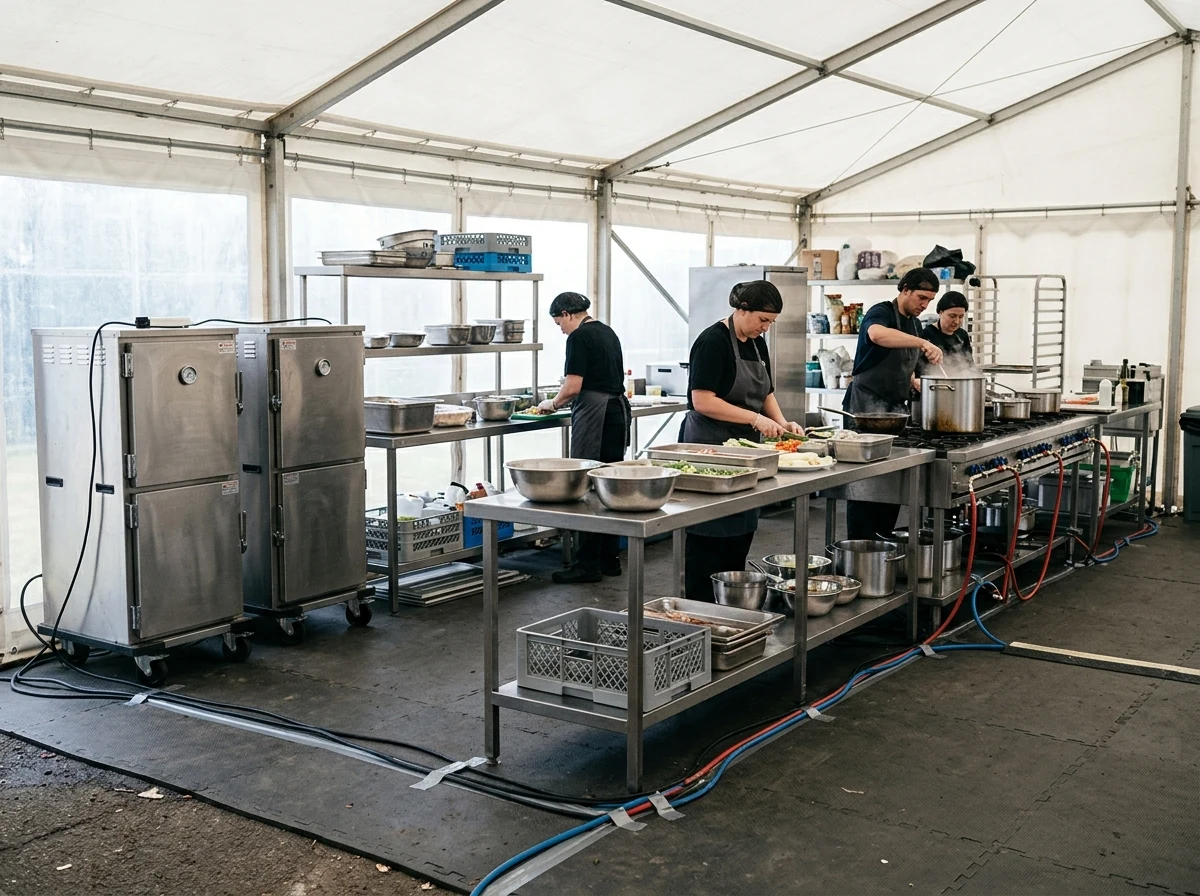
Temporary field kitchen in a marquee with mobile heated cabinets on castors
Specified to be movedCastors, weight and robustness considered up front
Built for handling

Most catering equipment fails from handling, not from cooking

  • Weight and balance checked, because two people have to lift it into a van.
  • Heavy-duty castors and brakes, since site floors are rarely flat and never clean.
  • Robust controls and protected panels, which is where damage usually starts.
  • Stackable and nesting where possible, so a van load is not half air.
  • Easy strip-down for cleaning, because equipment gets cleaned in a hurry.
  • Spares availability confirmed, so a damaged handle does not write off a cabinet.
Food safety

The cold chain is the part that gets audited

A catering operation is judged on whether it can prove temperature control from production through transport to service. The equipment has to make that easy.

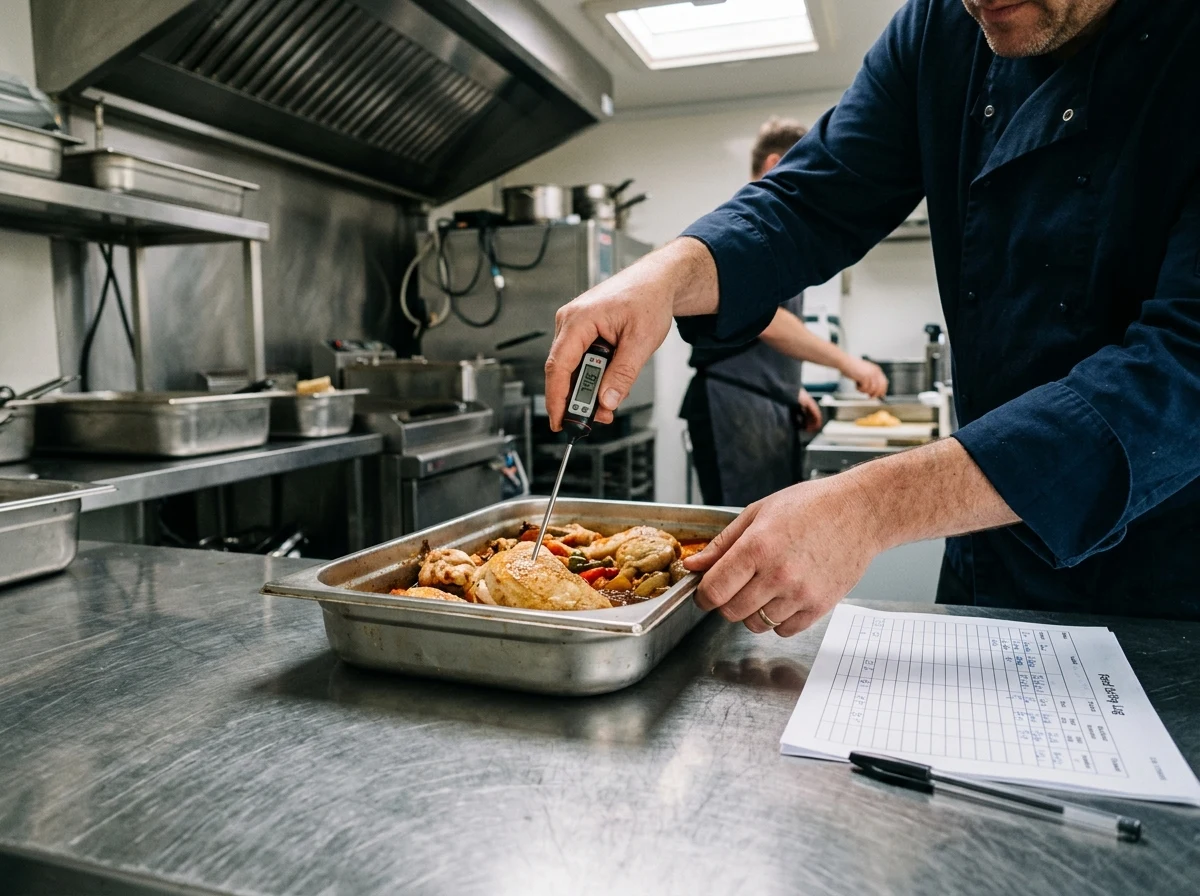
Chef using a digital temperature probe and recording the reading on a paper sheet
Recorded, not rememberedMonitoring across production, transport and service
Own or hire

Buy the equipment you use every week

Most caterers own too much of the wrong thing and hire too little of the right thing. We will tell you which items justify ownership at your volume and which are better hired for the peak.

  • Utilisation reviewed honestly before we recommend a purchase.
  • Core equipment owned, so weekly work does not depend on availability.
  • Peak capacity hired, rather than bought and stored eleven months of the year.
  • Standardised across the fleet, so trays, racks and spares interchange.
  • Planned replacement from age and fault history rather than after a failure.
  • Leasing where cash flow suits it better than outright purchase.
Talk about your fleet
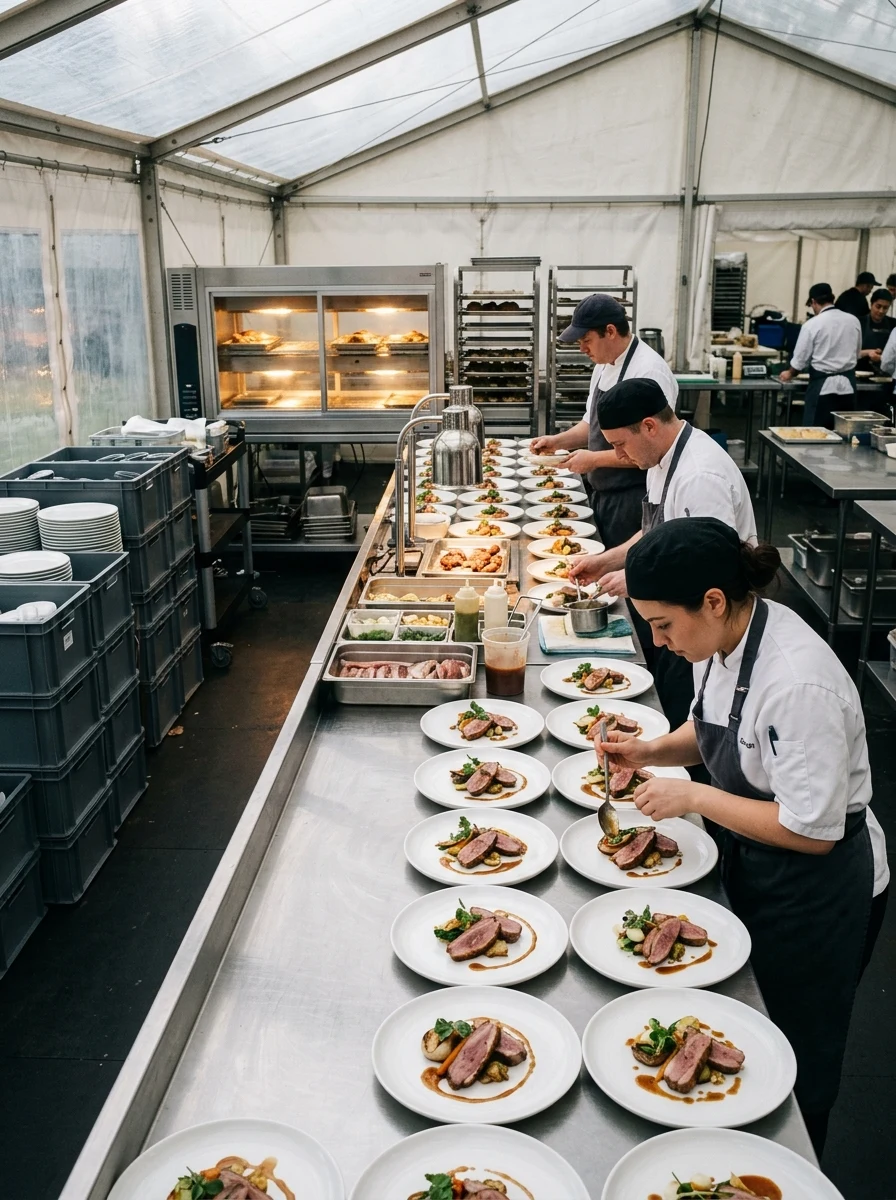
Chefs plating a function meal on a stainless bench in a marquee kitchen
How it runs

From base kitchen to the biggest job of the year

1

Survey

The base unit, your job sizes, what you hire in and what keeps breaking.

2

Specification

Production, transport and on-site equipment specified together, with hire and purchase split out.

3

Programme

Delivery and install timed around your season, not in the middle of it.

4

Commission and train

Installed, commissioned, certificated and demonstrated to the team.

5

Service contract

Planned servicing in your quiet months, priority response in the busy ones.

1 contract
Base kitchen, transport and site equipment
All makes
Serviced whether we supplied it or not
Off season
Servicing scheduled when you are quiet
UK-wide
Contract, event and outside caterers
Questions

What caterers ask first

Should we buy or hire?

It depends on utilisation. Anything used most weeks usually justifies ownership; peak-only capacity rarely does. We will look at your calendar honestly before recommending either.

Can you supply equipment that runs on site power?

Yes. We specify around what venues can actually provide, including single-phase and generator supplies, and flag where a load simply will not work.

Do you cover transport refrigeration?

We specify refrigerated transport and on-site mobile refrigeration as part of the cold chain, alongside monitoring and recording.

How do we prove temperature control?

With monitored storage, transport and holding, and logs that can be exported. The equipment should make the record automatic rather than manual.

Can you service equipment during the season?

Yes, and planned servicing is normally scheduled into your quiet months with priority response during the busy ones.

Will you work with a kitchen we rent?

Yes, though anything fixed to the building needs the landlord’s agreement, which we will flag at survey.

Keep reading

Related services

Talk to us about your operation

Tell us the biggest job you take and what you hire in.

We will specify the production, transport and on-site equipment together, and tell you what is genuinely worth owning.

Speak to the team · Mon–Fri 9–501200 411 914

We reply to every enquiry within one working day.