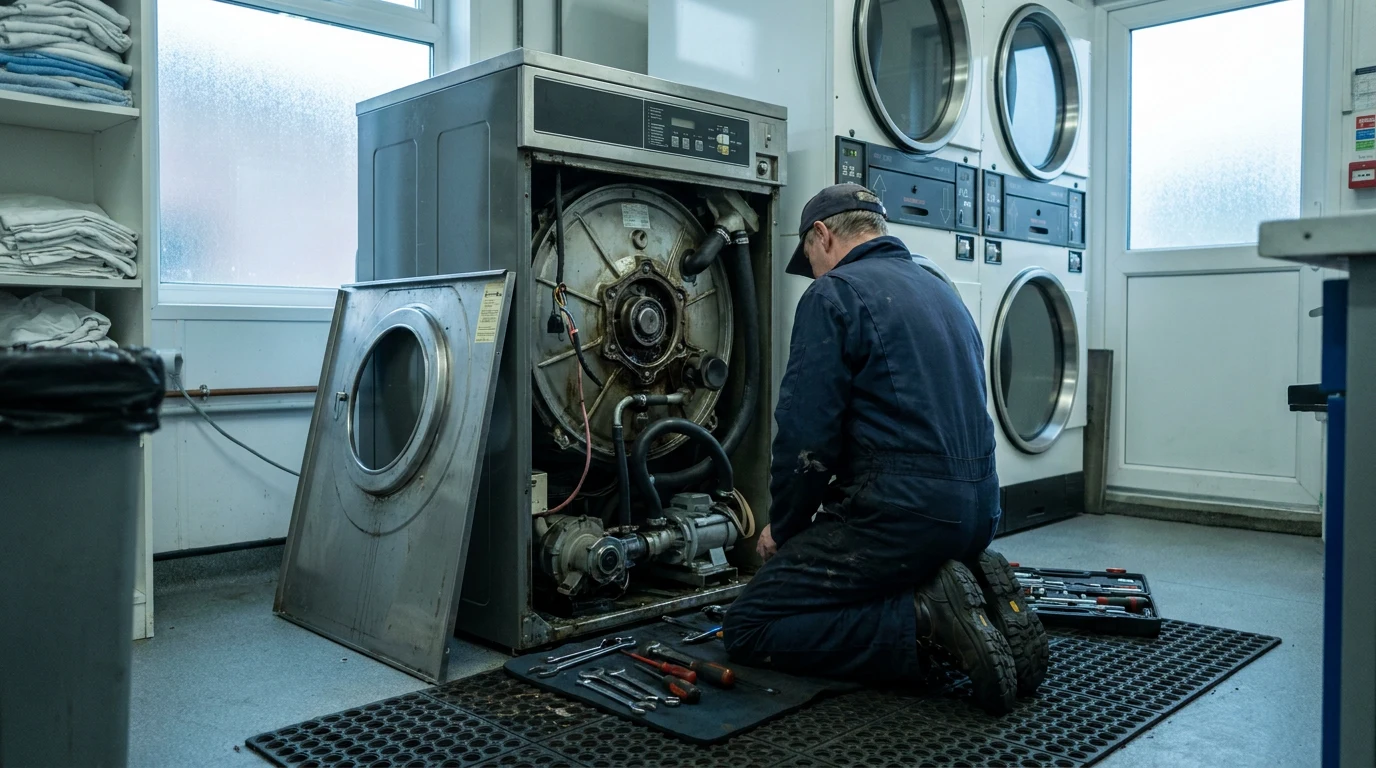
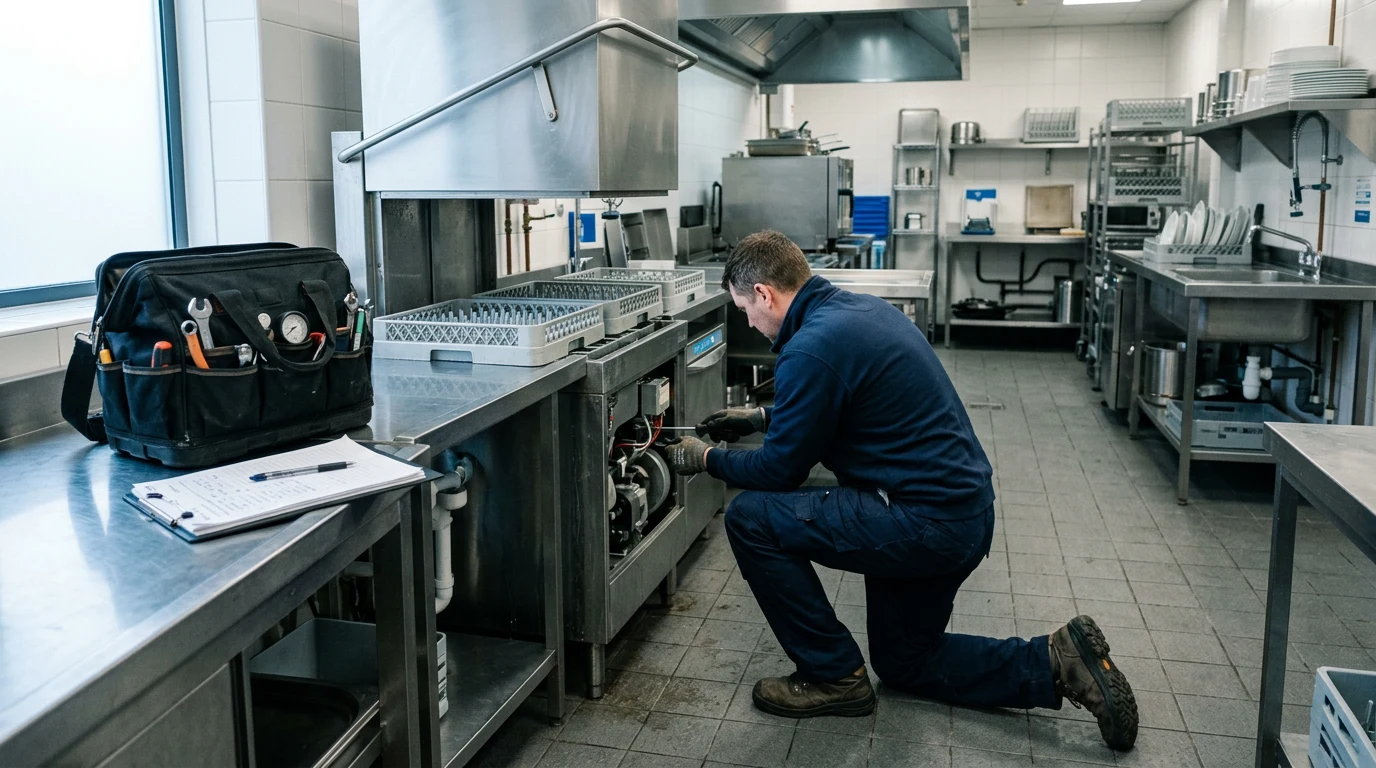
Equestrian

Horse rugs will destroy a domestic machine in a season. They are heavy, filthy and full of hair.

Commercial laundry equipment for equestrian centres, riding schools, livery yards and rug laundries. Specified for saturated rugs, heavy soiling and the hair that blocks everything, with the drainage and filtration to match.

Typical siteYards, riding schools and rug laundries
WashesRugs, numnahs, pads and stable textiles
Built forWeight, grit, hair and daily use
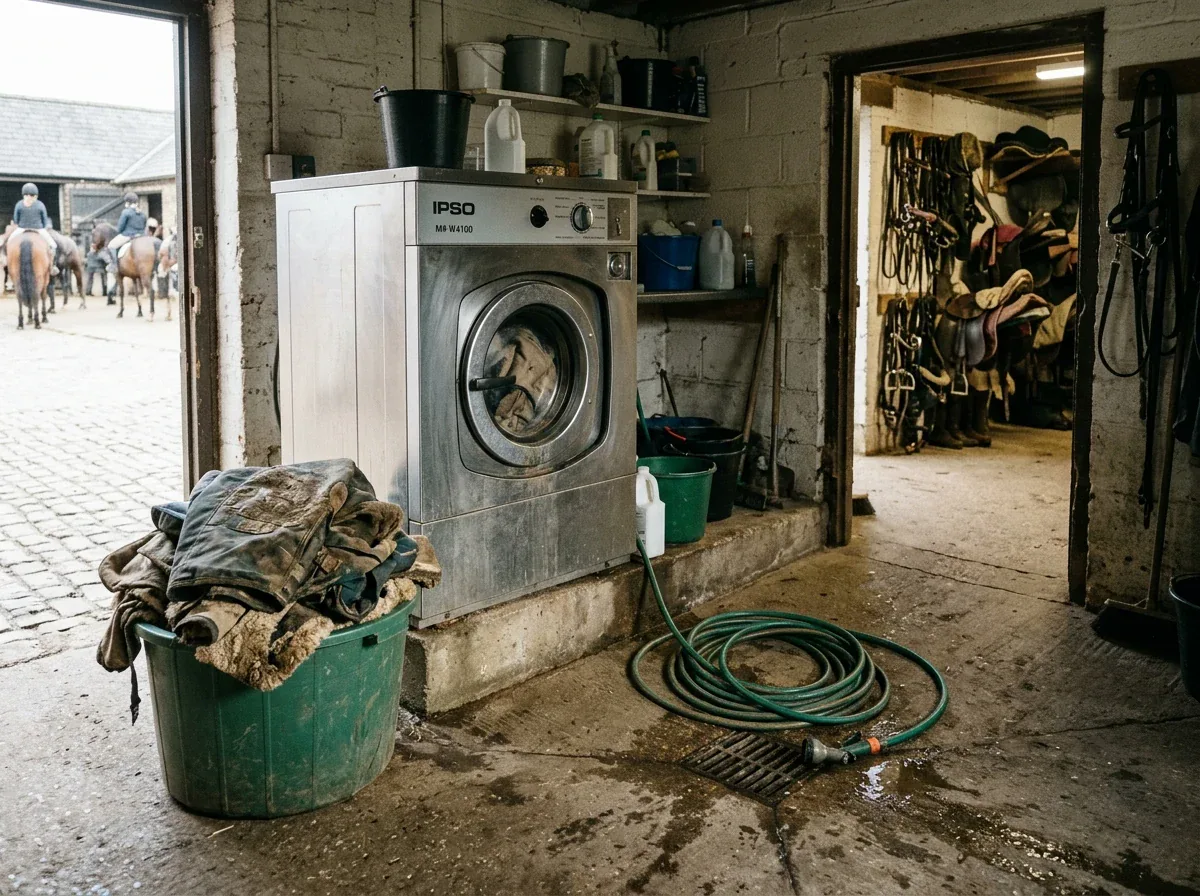
Heavy duty washer extractor in a stable yard laundry with muddy horse rugs waiting
What we size forA soaked winter rugWet weight, not dry weight, decides the machine
What is different here

This is the hardest laundry work there is

Rug washing punishes machines in ways hotel linen never does. Six things shape every equestrian specification.

Weight when wet

A soaked turnout rug weighs several times its dry weight. Drum size and suspension have to be specified for it.

Wet weight sized

Hair and grit

Hair blocks pumps and filters, grit wears seals and bearings. Filtration and drainage are as important as the machine.

Filtration specified

Waterproofing survives or it does not

Wash temperature, chemistry and mechanical action decide whether a rug comes out still waterproof.

Chemistry matched

Winter is relentless

Rugs come in wet and go out needed the same day. Drying capacity is usually the real bottleneck.

Drying led

Rural services

Single-phase supplies, private water, septic drainage and outbuildings. What is possible is decided on site.

Surveyed first

It has to survive abuse

Commercial machines with heavy-duty bearings and accessible parts, because this duty finds every weakness.

Built to last
Setting up or replacing a rug laundry?Tell us how many rugs a week and what services the building has. We will specify what will actually survive it.
Scope

Wash, dry and the plumbing behind it

Three parts, and the plumbing is the one that gets skipped.

Washing

Machines that survive rugs

Commercial washer extractors specified for wet weight, grit and daily use.

  • High-capacity washer extractors
  • Programmable cycles for rugs, numnahs and pads
  • Heavy-duty bearings and suspension
  • Reproofing-compatible programmes
  • Machines sized for the heaviest turnout rugs
Drying

Usually the bottleneck

Getting rugs dry the same day is what limits most yards.

  • High-capacity commercial tumble dryers
  • Drying rooms and rails for items that cannot tumble
  • Lint handling and duct routes designed in
  • Heat sources matched to rural power supplies
  • Capacity sized to winter, not to summer
Water and waste

The part that gets skipped

Filtration, drainage and chemistry, without which the machines fail early.

  • Lint and hair filtration before drainage
  • Grease and grit traps where required
  • Drainage sized for high-volume discharge
  • Correct detergent and reproofing dosing
  • Water supply and pressure confirmed
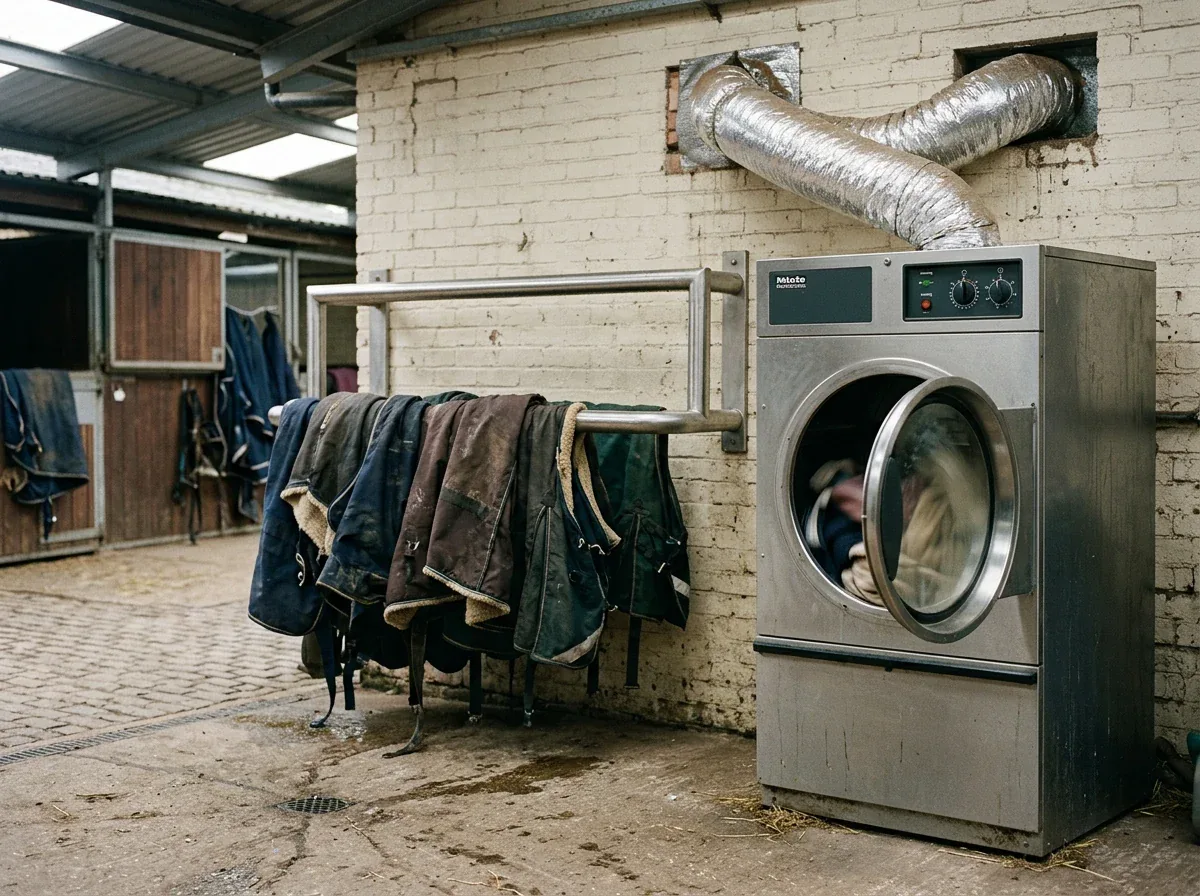
Commercial tumble dryer and drying rail with washed horse rugs in a yard laundry
Drying decides throughputCapacity sized to a wet winter week, not an average one
Drying and lint

Drying capacity is what limits a rug laundry, and lint is what sets it on fire

  • Dryer capacity sized to a wet winter week, since that is when the yard actually needs it.
  • Lint handling designed in, because rug hair builds up faster than anything in a normal laundry.
  • Duct routes kept short and accessible, so they can be cleared as part of a service visit.
  • Drying rooms or rails for items that should not be tumbled.
  • Heat source matched to the site supply, whether that is gas, electric or something rural.
  • Fire risk taken seriously, which in a building full of hay and bedding is not an abstract concern.
Water and waste

Hair and grit are what kill the machines

Every equestrian laundry we are called to for repeated failures has the same underlying cause. It is almost never the machine itself.

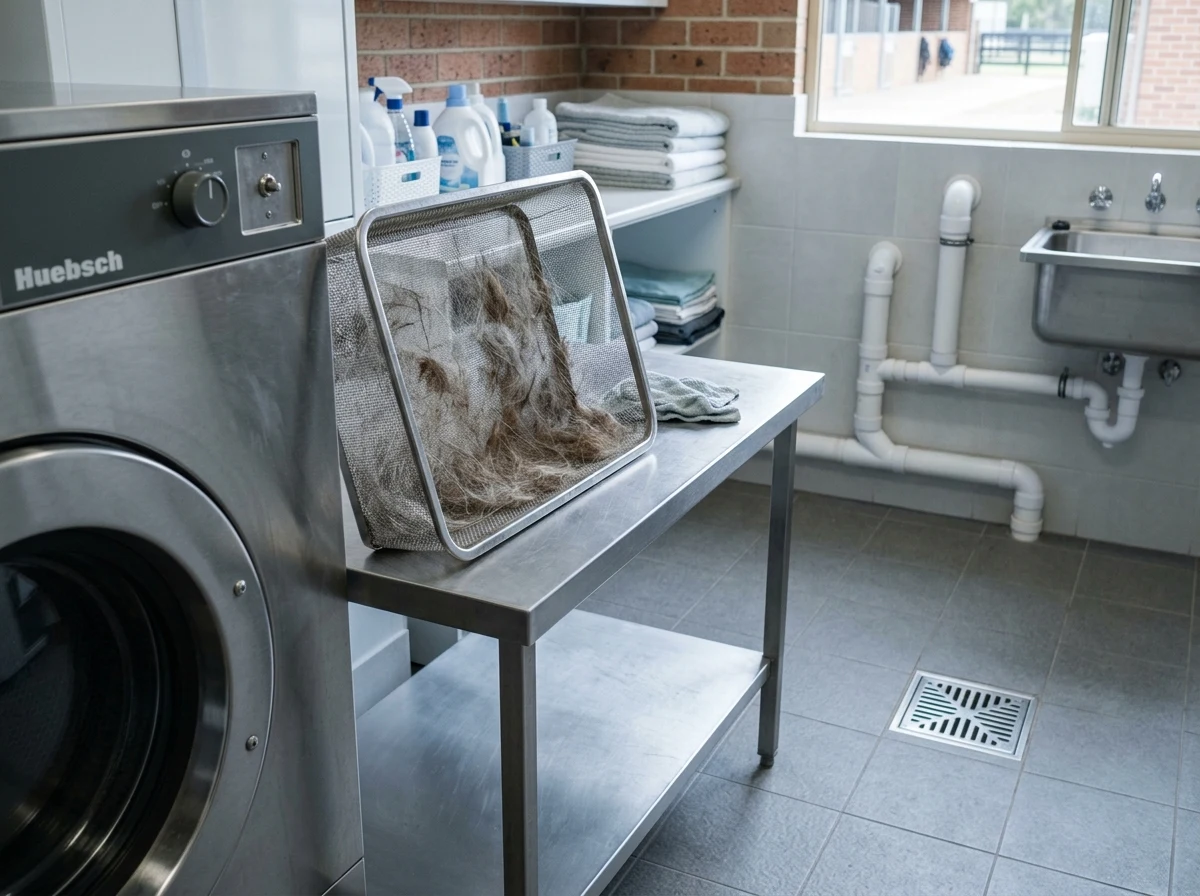
Lint and hair filter basket pulled out at the base of a commercial washing machine
Filtration before drainageHair and grit intercepted before they reach the pump
Running a rug laundry as a service

If you wash for other yards, it is a business

Plenty of yards take in rugs from neighbouring liveries over winter. That changes the specification: throughput, tracking and turnaround start to matter as much as the wash itself.

  • Throughput sized to peak weeks, not to your own rugs.
  • A second machine rather than a bigger one, so a breakdown does not stop the service.
  • Space for sorting, tagging and returning, which is where the mistakes happen.
  • Consistent results, because a customer notices a rug that is no longer waterproof.
  • Running costs understood, so pricing per rug actually makes money.
  • Servicing scheduled for the summer, before the winter rush.
Talk about capacity
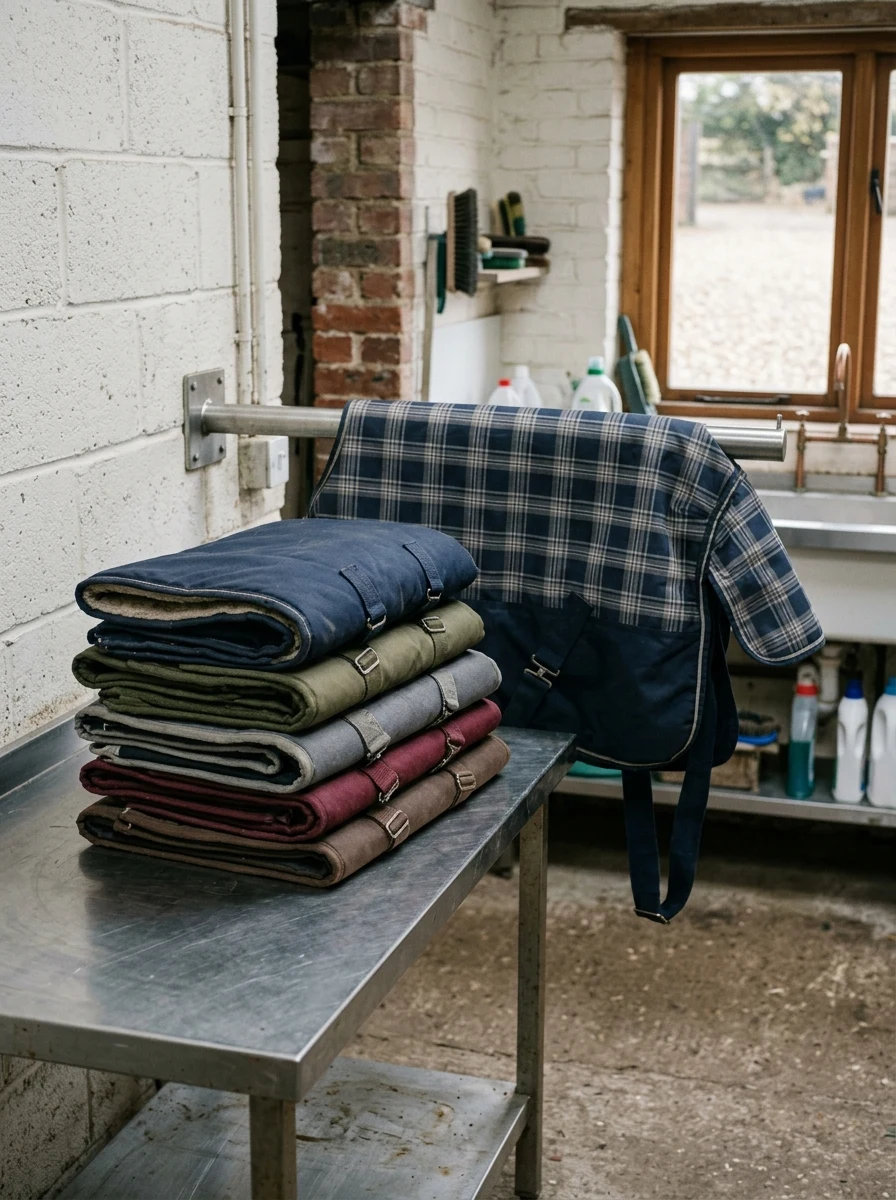
Clean folded horse rugs stacked on a stainless bench in a yard laundry
How it runs

From a broken domestic machine to a working laundry

1

Survey

Rug numbers, peak weeks, the building, the water supply and where the waste goes.

2

Specification

Machines, drying and filtration sized to wet weight and winter volume.

3

Services

Power, water, drainage and ventilation confirmed and, where needed, upgraded.

4

Install and commission

Installed, commissioned and demonstrated, including the cycles for different items.

5

Service contract

Annual servicing scheduled in the summer, before the season starts.

3x weight
What a soaked turnout rug can weigh
Winter led
Capacity sized to the worst weeks
All makes
Serviced whether we supplied it or not
UK-wide
Yards, riding schools and rug laundries
Questions

What yards ask first

Why do domestic machines keep failing?

Wet weight, grit and hair. A soaked rug exceeds what a domestic drum and suspension are built for, and hair blocks the pump. It is usually a matter of when, not if.

Will commercial washing ruin the waterproofing?

Not if the cycle and the chemistry are right. We specify programmes and dosing for turnout rugs, including reproofing, and set them at commissioning.

We are on single-phase and a septic system. Is that a problem?

It is a constraint rather than a blocker. We survey the supply and the drainage first and specify what will actually work, or tell you what needs upgrading.

How many machines do we need?

It comes from peak-week rug numbers and drying capacity. Two smaller machines often beat one large one, because a breakdown does not stop the service.

Can you service equipment we already have?

Yes, whatever the make, and we will tell you if the underlying problem is filtration or drainage rather than the machine.

When should servicing be done?

Summer, before the winter rush. That is when we schedule planned visits for equestrian customers.

Keep reading

Related services

Talk to us about your yard

Tell us how many rugs a week and what the building has.

We will specify machines that survive the work, with the filtration and drainage that keep them alive.

Speak to the team · Mon–Fri 9–501200 411 914

We reply to every enquiry within one working day.